info@GeeseiAffiliate.com
Digital Marketing Strategy 2026: The Complete Beginner’s Guide
introduction
Digital Marketing Strategy 2026: The Complete Beginner’s Guide If you’re new to online promotion, building a solid digital marketing strategy can feel overwhelming — there are dozens of channels, tools, and buzzwords competing for your attention. This guide breaks it down into clear, practical steps so you can build a digital marketing strategy that works, even if you’re starting from zero.
What Is a Digital Marketing Strategy?
Digital Marketing Strategy 2026: The Complete Beginner’s Guide A digital marketing strategy is a plan that outlines how a business will use online channels — search, social media, email, video, and paid ads — to reach its audience, build trust, and generate sales. Unlike a general marketing plan, it focuses specifically on digital channels and the data-driven tactics used to optimize them.
A good digital marketing strategy doesn’t just list channels to use. It connects each channel to a specific business goal and defines how success will be measured.
Why Digital Marketing Strategy Matters More in 2026
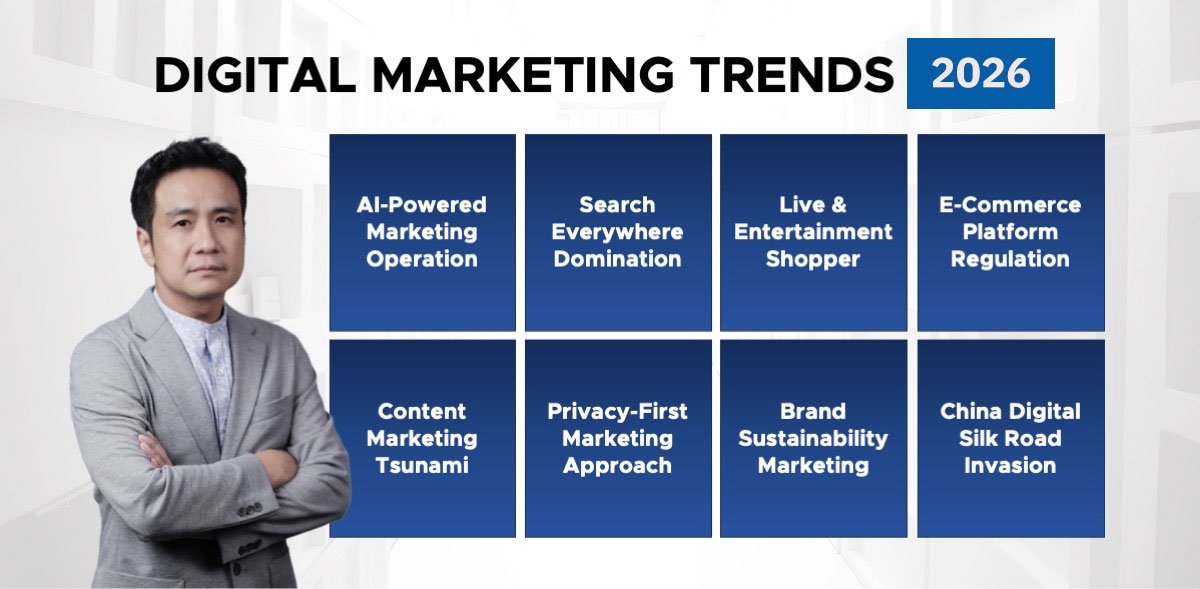
Digital marketing is shifting faster than it has in years, largely driven by artificial intelligence. AI now plays a central role in how campaigns are planned, personalized, and optimized — shifting marketers’ focus from manual execution toward interpreting data and directing AI tools strategically. <cite index=”1-1″>Personalization has become a defining priority, with the majority of consumers more likely to buy from brands that deliver personalized content.</cite>
A few other shifts worth knowing as a beginner:
- AI-assisted and agentic tools are increasingly used to automate repetitive campaign tasks and forecast performance before launch.
- Short-form and shoppable video continues to grow, with platforms building direct purchase paths into video content.
- Cross-channel measurement is becoming essential as ad spend spreads across more platforms, pushing more marketers toward unified measurement approaches.
- Privacy-first data strategies are increasingly necessary as third-party tracking continues to decline.
You don’t need to master all of this on day one. But understanding these shifts helps you build a digital marketing strategy that won’t be outdated in six months.
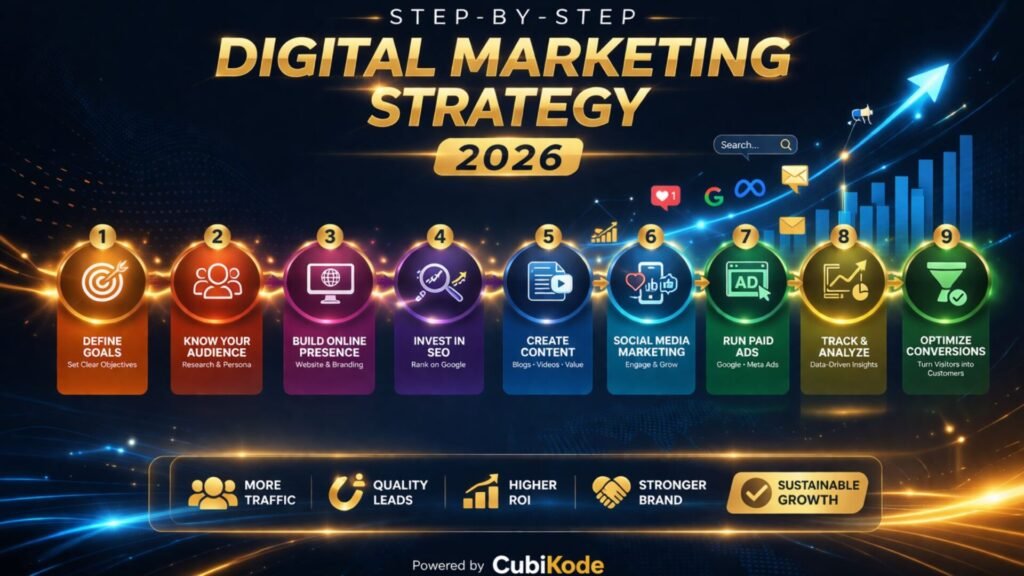
Step 1: Set Clear, Specific Goals
Every digital marketing strategy should start with a defined goal, not a channel. Common goals include:
- Generating leads or sign-ups
- Driving direct online sales
- Building brand awareness
- Growing an email list or community
Write your goal as a measurable statement: “Generate 200 leads per month” is a strategy anchor. “Get more traffic” is not.
Step 2: Identify Your Target Audience
You cannot build an effective digital marketing strategy without knowing exactly who you’re trying to reach. Define:
- Who your ideal customer is (age, location, job, income)
- What problem they’re trying to solve
- Where they spend time online
- What convinces them to buy
If you already have customers, look at your existing sales and support data. If you’re starting from scratch, research your competitors’ customers and industry forums.
Step 3: Choose Your Core Digital Marketing Channels
Beginners often make the mistake of trying to be active on every channel at once. Instead, pick 2–3 channels based on where your audience actually spends time.
Here are the main digital marketing channels to understand:
Search Engine Optimization (SEO) Improves your website’s visibility in search engine results. It’s slower to show results but builds long-term, low-cost traffic.
Content Marketing Blog posts, videos, and guides that attract and educate your audience, supporting SEO and building trust over time.
Social Media Marketing Builds awareness and community on platforms like Instagram, TikTok, LinkedIn, or Facebook. Short-form video is currently one of the strongest-performing content formats.
Email Marketing One of the highest-ROI digital channels. Used to nurture leads and turn one-time buyers into repeat customers.
Pay-Per-Click (PPC) Advertising Paid ads on search engines or social platforms that generate fast, measurable traffic — ideal when you need results quickly.
Video and Connected TV (CTV) Advertising Video consumption keeps growing across platforms, and increasingly includes shoppable formats that let viewers purchase directly from the video.
Step 4: Build Your Website as Your Digital Home Base
Every digital marketing strategy needs a central destination — usually your website — where traffic converts into leads or sales. Before driving traffic anywhere, make sure your site:
- Loads quickly on mobile devices
- Has a clear value proposition above the fold
- Includes a simple, obvious call-to-action (buy, sign up, contact)
- Is easy to navigate on any screen size
Sending paid or organic traffic to a slow, confusing website wastes your entire marketing effort.
Step 5: Create Content That Matches the Buyer’s Journey
Not all content serves the same purpose. Structure your content around three stages:
- Awareness — educational blog posts, short videos, and social content that introduce your brand
- Consideration — comparison guides, case studies, and testimonials that build trust
- Decision — product demos, limited-time offers, and reviews that push toward a purchase
This structure keeps your digital marketing strategy focused on moving people toward a sale, not just generating views.
Step 6: Use Data and AI Tools to Personalize and Optimize
Personalization is now a core expectation, not a bonus feature. Beginners can start simple:
- Segment your email list by interest or behavior instead of sending one blanket message
- Use AI-powered tools to generate content variations and test what resonates
- Track which content and channels are actually converting, not just getting clicks
AI tools can speed up execution, but they work best when guided by a clear strategy — not as a replacement for one.
Step 7: Set a Budget and Allocate It by Channel
As a beginner, start with a modest budget split across your chosen channels, weighted toward whichever channel shows the best early results. Track cost per lead or cost per sale for each channel so you know where your money is working hardest.
Step 8: Track the Right Metrics
Avoid focusing only on vanity metrics like likes or followers. Instead, track:
- Website traffic and traffic sources
- Conversion rate (visitors to leads or customers)
- Cost per acquisition (CPA)
- Email open and click-through rates
- Return on ad spend (ROAS) for paid campaigns
Set up tracking tools like Google Analytics and platform-specific ad dashboards from day one.
Step 9: Test, Learn, and Adjust Regularly
A digital marketing strategy is never “finished.” Review your results monthly:
- Which channel is generating the lowest cost per lead?
- Which content format is driving the most engagement?
- Where is your budget underperforming?
Cut what isn’t working and reinvest in what is. Small, consistent adjustments outperform big, infrequent overhauls.
Common Beginner Mistakes to Avoid
- Trying every channel at once instead of mastering 2–3
- Skipping goal-setting and jumping straight into posting or advertising
- Ignoring mobile optimization on your website
- Focusing on vanity metrics instead of conversions and revenue
- Not tracking data, making it impossible to know what’s working
conclusion
A strong digital marketing strategy in 2026 isn’t about chasing every new AI tool or trend — it’s about clear goals, a defined audience, the right channels, and consistent measurement. Start small, focus on what you can execute well, and build from there. As you gather data on what works for your audience, you can expand into new channels and more advanced tactics with confidence.