info@GeeseiAffiliate.com

How to Create a Marketing Plan That Actually Drives Sales
introduction
How to Create a Marketing Plan That Actually Drives Sales Most marketing plans fail for one simple reason: they focus on activity instead of outcomes. Posting content, running ads, and sending emails feels productive, but none of it matters if it doesn’t lead to revenue. This guide shows you how to create a marketing plan that actually drives sales — not just traffic, followers, or vanity metrics.
What Is a Marketing Plan (and Why Most Get It Wrong)
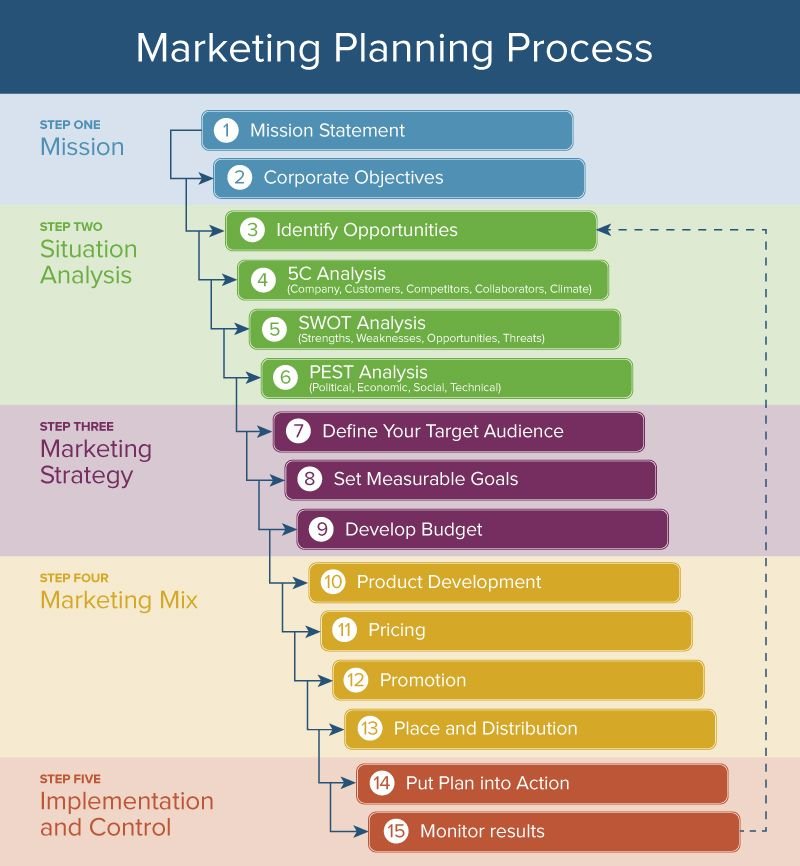
A marketing plan is a documented strategy that outlines how a business will reach its target audience, communicate its value, and convert interest into paying customers. It’s not a to-do list of tactics. It’s a roadmap connecting your business goals to specific, measurable marketing actions.
The most common mistake is starting with tactics (“we should post more on Instagram”) instead of starting with goals and data. A marketing plan built backward from sales targets will consistently outperform one built forward from trends.
Step 1: Define a Specific, Measurable Sales Goal
Before choosing a single channel or tactic, decide exactly what “success” looks like. Vague goals like “increase brand awareness” don’t drive sales because they can’t be measured against revenue.
Instead, set goals like:
- Generate 150 qualified leads per month by Q4
- Increase online sales by 20% within 6 months
- Reduce customer acquisition cost (CAC) by 15% this year
Use the SMART framework — Specific, Measurable, Achievable, Relevant, Time-bound — for every goal you set. This keeps your marketing plan accountable to real business outcomes, not just activity.
Step 2: Know Your Target Audience in Detail
A marketing plan that actually drives sales starts with a precise understanding of who buys from you. Generic targeting wastes budget on people who will never convert.
Build a customer profile that includes:
- Demographics (age, location, income, job title)
- Pain points and challenges they’re trying to solve
- Where they spend time online
- What triggers them to buy (price, trust, urgency, social proof)
- Objections that stop them from purchasing
Talk to existing customers, review support tickets, and analyze past sales data. The clearer your picture of the buyer, the more efficient every dollar you spend becomes.
Step 3: Analyze Your Competitors and Market Position
Look at three to five direct competitors and identify:
- What channels they use to acquire customers
- Their pricing and positioning
- Gaps in their messaging you can exploit
- Customer complaints about them (a goldmine for your own messaging)
This isn’t about copying competitors — it’s about finding an opening your marketing plan can own.
Step 4: Choose the Right Marketing Channels (Not All of Them)
One of the biggest sales-killers in a marketing plan is spreading budget too thin across every available channel. Instead, choose 2–3 channels where your target audience already spends time and where you can execute consistently.
Common high-impact channels include:
- SEO and content marketing — drives long-term, compounding organic traffic
- Paid search (PPC) — captures buyers actively searching for solutions
- Email marketing — highest average ROI of any digital marketing channel
- Social media marketing — builds awareness and trust over time
- Referral and partnership marketing — leverages existing trust to generate warm leads
Match the channel to the buyer’s journey stage. Top-of-funnel channels (social, content) build awareness. Bottom-of-funnel channels (search ads, email, retargeting) close sales.
Step 5: Craft a Clear Value Proposition
Your marketing plan will not drive sales if your messaging doesn’t clearly answer one question: “Why should I buy from you instead of anyone else?”
A strong value proposition:
- States the specific outcome or result you deliver
- Differentiates you from competitors
- Speaks directly to the audience’s biggest pain point
- Avoids vague claims like “high quality” or “best service”
This message should appear consistently across your website, ads, emails, and sales conversations.
Step 6: Map Out the Buyer’s Journey
Sales rarely happen after one touchpoint. Build your marketing plan around the three core stages of the buyer’s journey:
- Awareness — the buyer realizes they have a problem
- Consideration — they research solutions and compare options
- Decision — they choose a provider and make a purchase
For each stage, define what content or offer moves the buyer to the next one — blog posts and social content for awareness, case studies and comparisons for consideration, and testimonials, demos, or discounts for decision.
Step 7: Set a Realistic Budget Based on Expected ROI
Allocate budget based on the return each channel is likely to generate, not on what feels comfortable. Track:
- Customer Acquisition Cost (CAC)
- Customer Lifetime Value (LTV)
- Expected conversion rate per channel
A simple rule: if a channel’s CAC is lower than your LTV by a healthy margin, it deserves more budget. If it’s close or negative, cut it or fix it before scaling.
Step 8: Build a Content and Campaign Calendar
Consistency beats intensity. A marketing plan that actually drives sales needs a realistic content and campaign schedule — weekly blog posts, biweekly email campaigns, monthly promotions — mapped to your goals and buyer’s journey stages.
Avoid overcommitting. A consistent, smaller output beats a sporadic, ambitious one that collapses after a month.

Step 9: Track the Right Metrics
Vanity metrics (likes, impressions, followers) don’t tell you if your marketing plan is driving sales. Track metrics tied directly to revenue:
- Conversion rate (visitor to lead, lead to customer)
- Cost per acquisition (CPA)
- Return on ad spend (ROAS)
- Customer lifetime value (LTV)
- Sales-qualified leads (SQLs) generated per channel
Set up tracking (Google Analytics, CRM, UTM parameters) before you launch anything, not after.
Step 10: Test, Measure, and Adjust Monthly
A marketing plan isn’t a document you write once a year and forget. Review performance monthly:
- Which channels are generating the lowest CAC?
- Which content or ads have the highest conversion rate?
- Where is budget being wasted?
Cut what isn’t working, double down on what is, and continuously refine your messaging based on real data — not assumptions.
conclusions
A marketing plan that actually drives sales isn’t built on more tactics — it’s built on clear goals, deep audience understanding, focused channel selection, and disciplined measurement. Start with the sales outcome you want, work backward to the actions that get you there, and review performance often enough to course-correct before budget is wasted.
Done right, your marketing plan becomes a repeatable system for growth — not a guessing game.